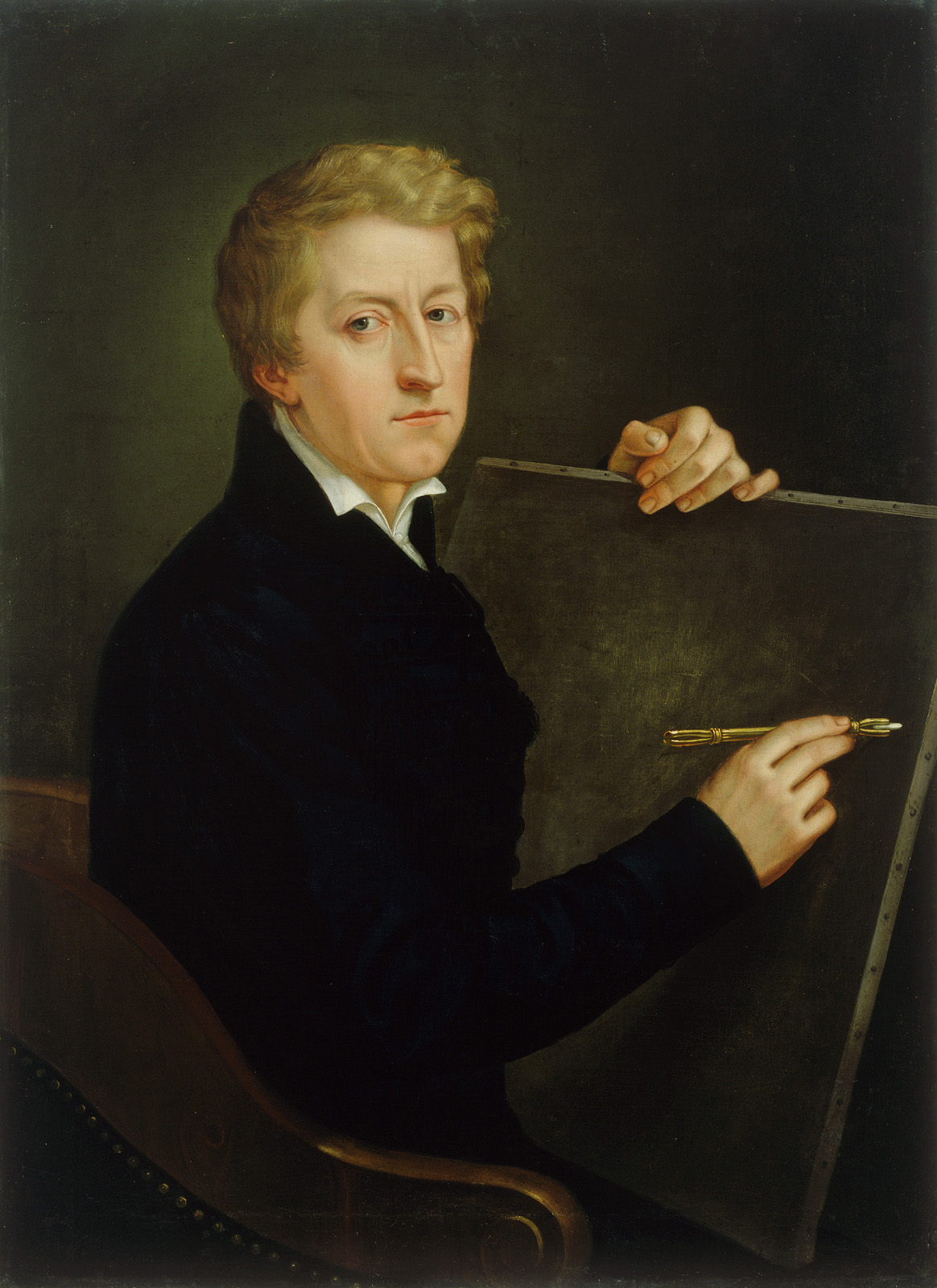
Self portrait
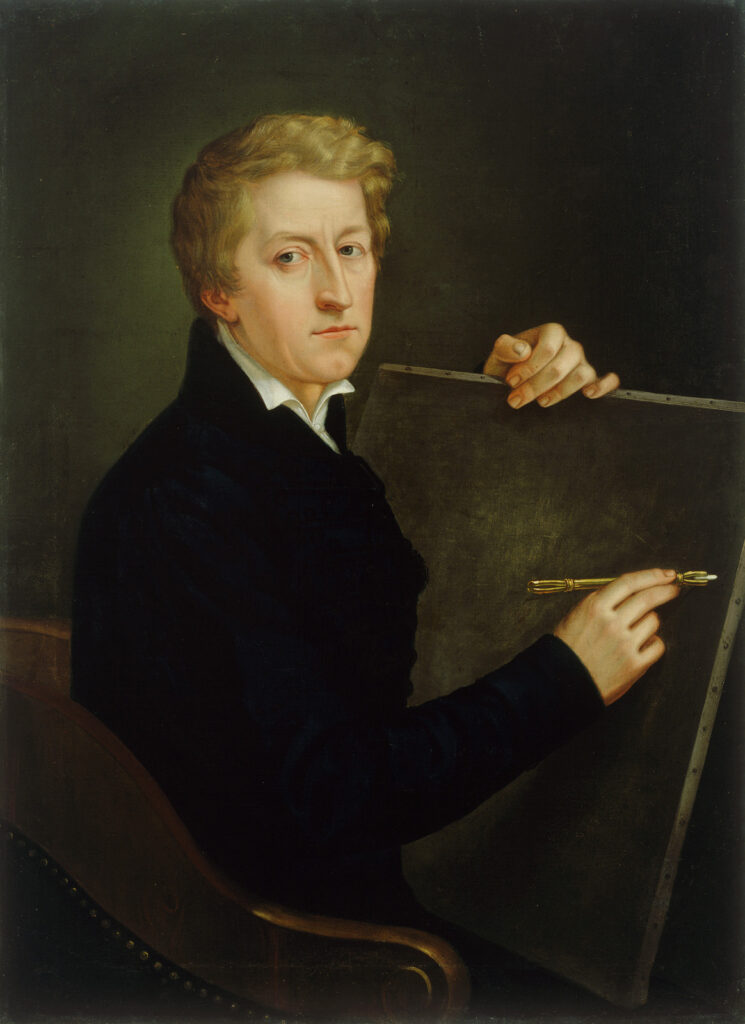
Matevž Langus produced several self-portraits. This self-portrait from the permanent collection emphasizes the status that Langus had built for himself as a painter by his wedding in 1828. He was already an established painter at the time, and so he recovered financially and thrust himself into the urbane environment around him, especially after moving with his wife to Reduta, where he could paint on larger canvases and exhibit his work to others in the city.
His countenance here is depicted from the waist up, confidently sporting a velvet jacket, his hair done perfectly. He is sitting before a dark background, with just the section around his head any lighter. The painter’s gaze is focused and the hands are accentuated, the left one holding a taut canvas and the right a drawing utensil. The pen here is not merely a professional attribute, but also alludes to the stylistic characteristics of Langus’s painting: emphasized sharp lines, a thin and smoothed layer of colour, and soft, plastic modeling. Such an attribute has another meaning, as understood by the Biedermeier painters, namely that any painting should be based on an excellent sketch.