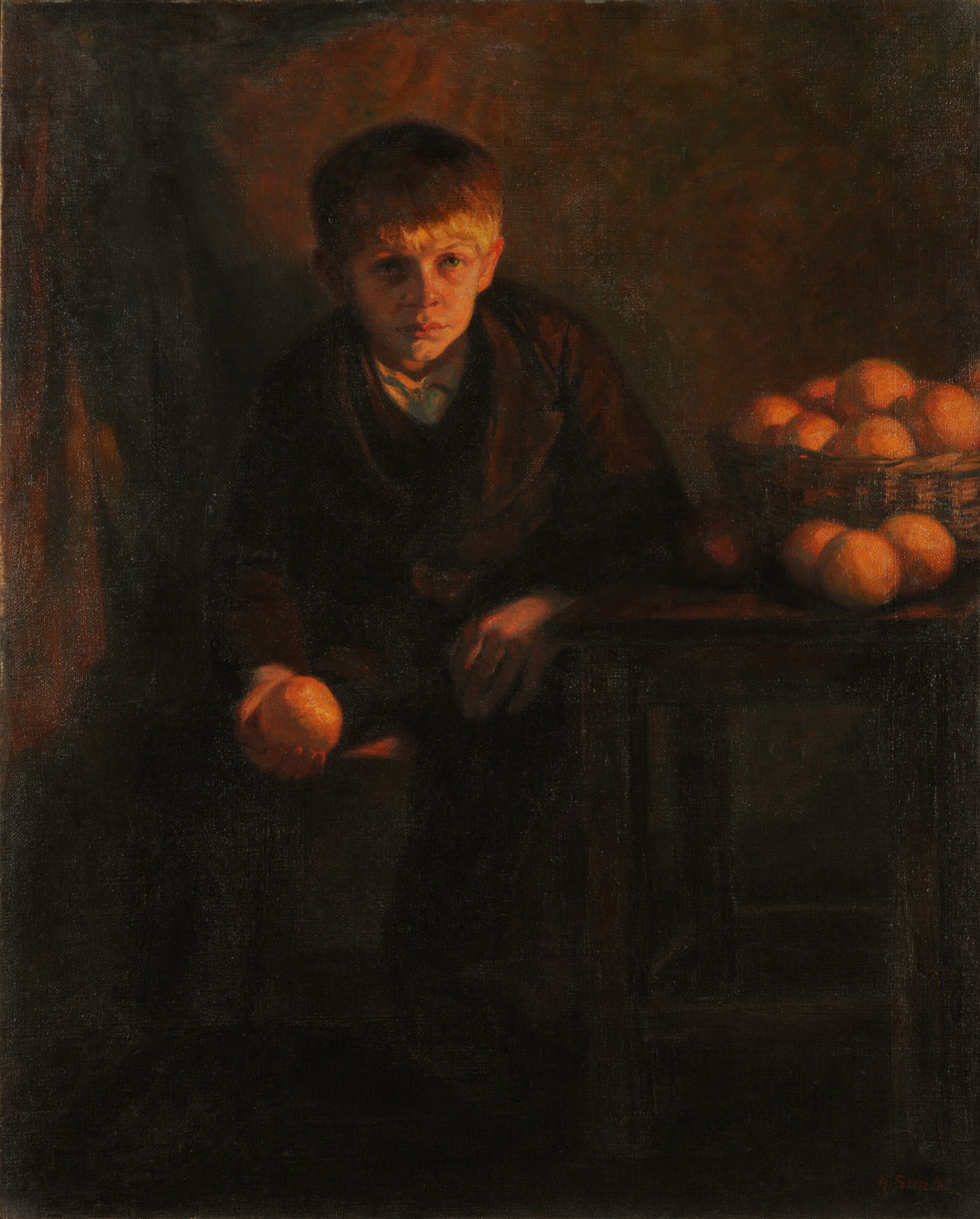
Boy with Oranges
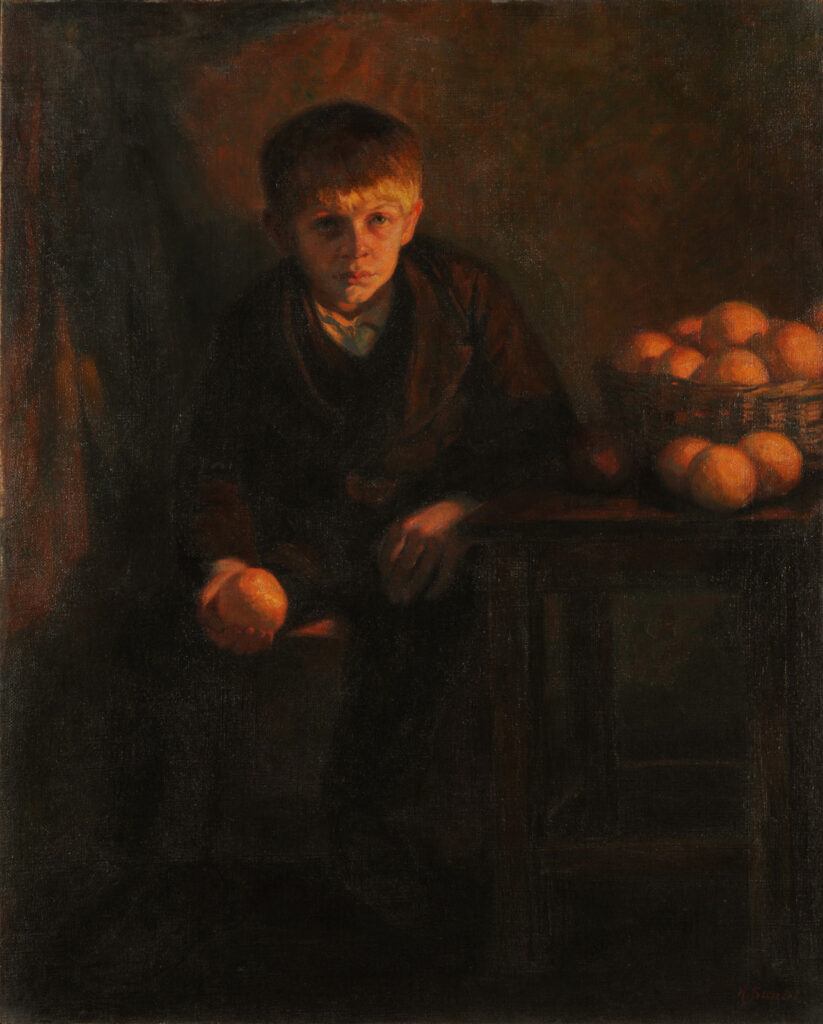
The boy sits deep in a dark room, the modest furnishings of which can be barely made out. A wicker basket full of precious fruit sits on a simple table. Orange light pours over the boy’s body, face and hands and recedes into the background, giving it depth and form. The 19th century motif of the orange seller was a continuation of this traditional genre motif, which was first popular in Mediterranean countries. However, in 19th century Central Europe, this motif was used primarily to highlight a social issue. Orange sellers, often children, belonged to the poorest classes of society, and their poverty and hardship are in stark contrast to the precious fruit. While oranges have always represented light, sunshine and happiness, their presence in this painting suggests the opposite, as the boy is joyless. The painter’s sensibility imbues this remarkable genre motif with a deep psychological insight into its subject.