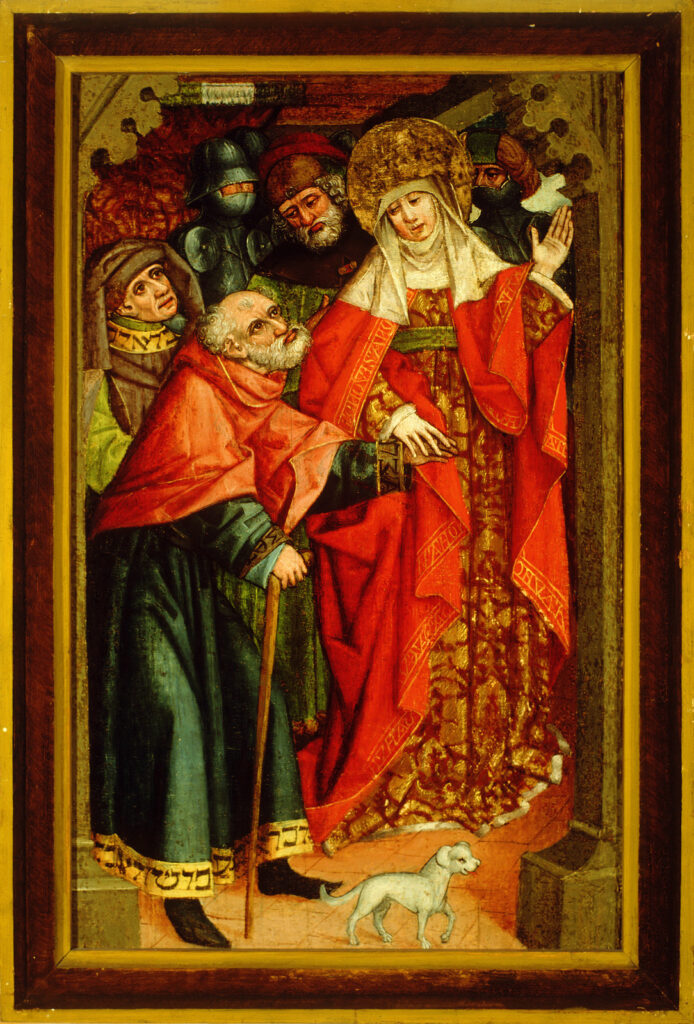

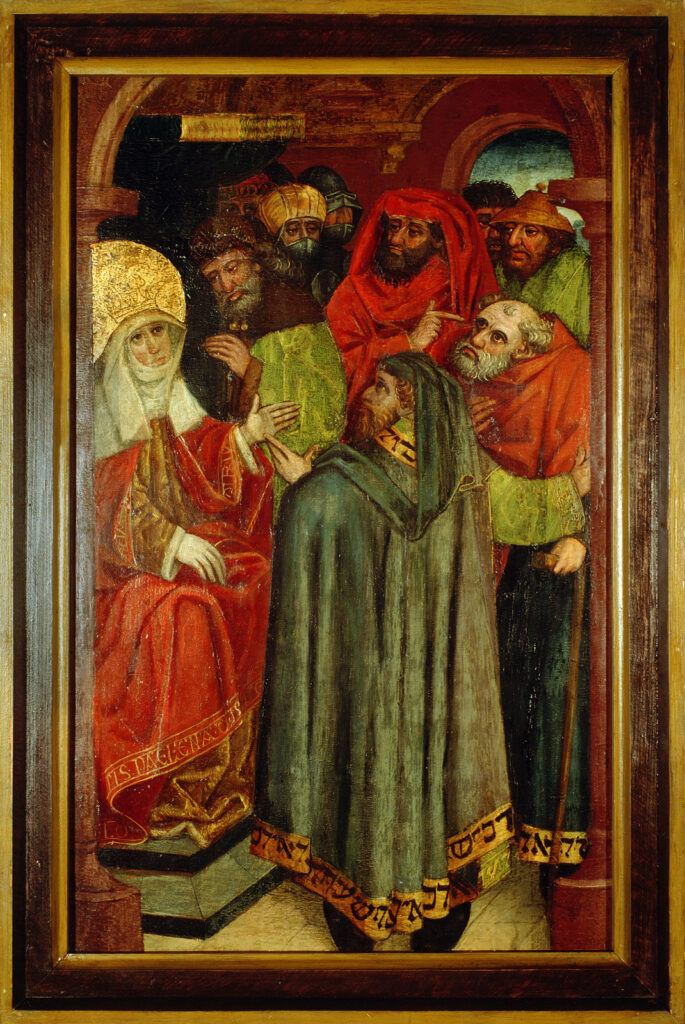
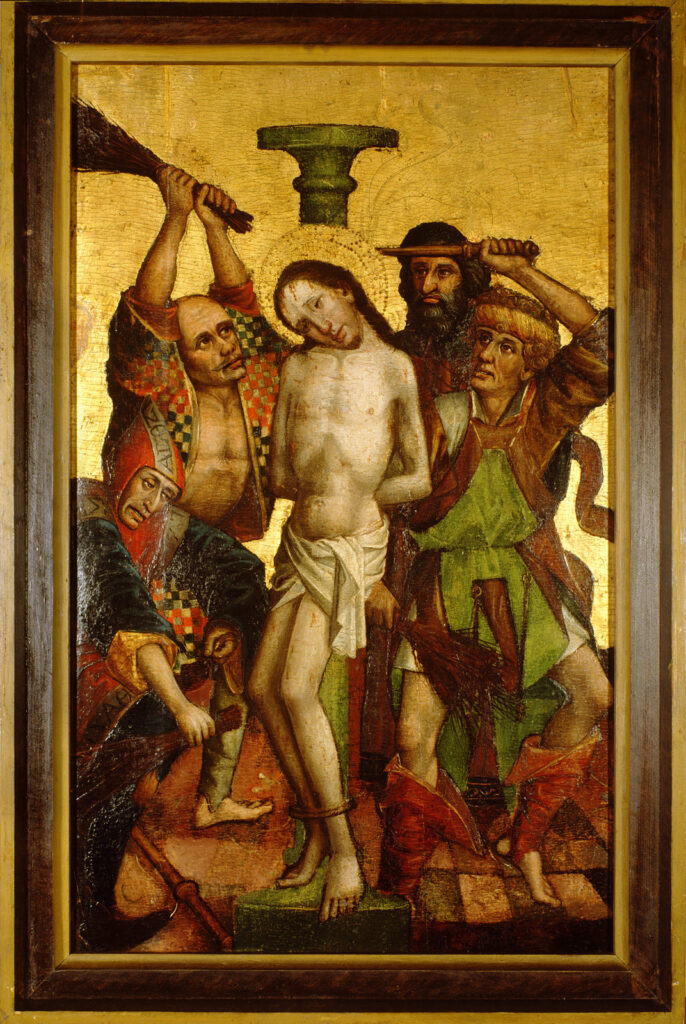
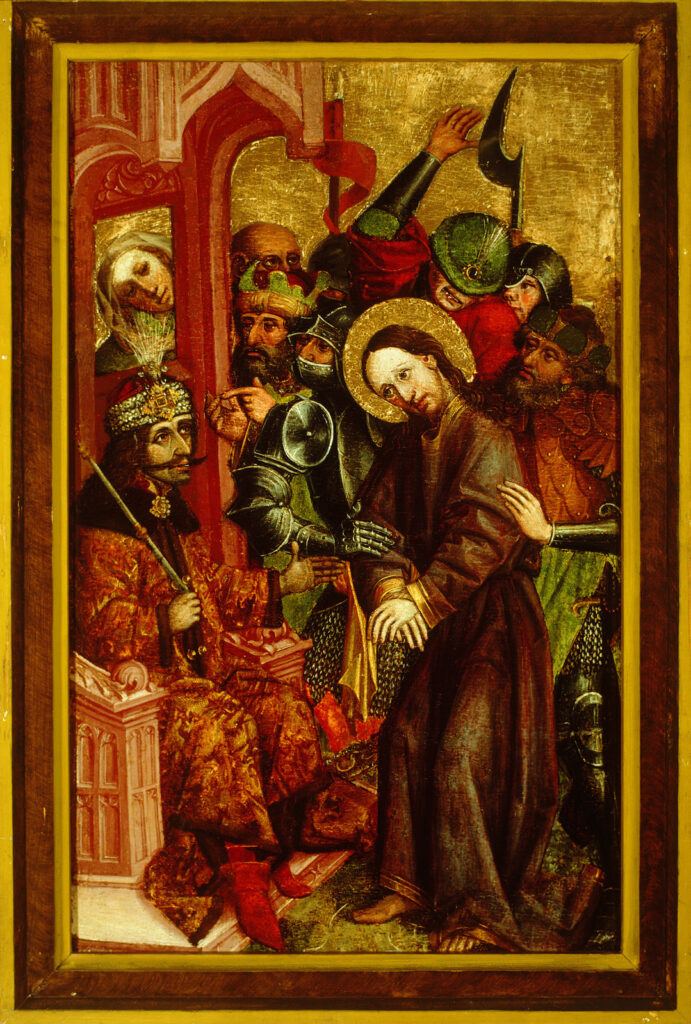
The artist is named after these four altar panels, which were once in the chapel of Velenje Castle. We do not know where the artist worked. The style of the paintings would suggest that he was close to the master who painted the panel of The Circumcision of Christ (Aachen, Suermond Museum), while Stange suggests that he was an assistant of the Master of the Tucher Altar in Nuremberg and a pupil of the Master of the Munich Crucifixion. The Master of the Velenje Panels achieves neither the strong plasticity of the Tucher altar nor the realistic tones of the Aachen panel – his realism flows into expressivity and the composition is moulded into a pyramid which threatens to fall apart at the slightest touch (Mikuž). Characteristic of the artist is the realistic depiction of detail (e.g. the armour, the attire of the executioners), which is still in the manner of the second quarter of the 15th century, while the sharp folds of the clothing already herald the third quarter. A. Saliger also points out the typical figures and their arrangement. In them he sees the influence of the reliefs of the Master of the Znojmo Altar (Österreichische Galerie, Vienna), the setting of the figures in the centre of the composition reminds him of the triptych in the Spitalkirche in Bad Aussee (1449), and he suggests that the painter’s Crowning with Thorns is reminiscent of the Hours by Gysbrecht de Brederode of Utrecht. He defined the artist’s style as “a belated succession to the realistic rectangular style”.
Panels from the same altar, which come from the Franciscan monastery in Vienna, are kept in the Dom- und Diözesanmuseum in Vienna (The Crowning with Thorns, Christ Carrying the Cross).
Lit.: Stane Mikuž, Štiri gotske table v Narodni galeriji, ZUZ, XIII, 1936, pp. 9-14, figg. 33-36; E[milijan] C[evc] in: Zeri [& Rozman], 1983, pp. 48-50; Arthur Saliger, Der Meister der Tafeln von Velenje, Gotika v Sloveniji: Nastajanje kulturnega prostora med Alpami, Panonijo in Jadranom, Akti mednarodnega simpozija, Narodna galerija, 20. – 22. 10. 1994, Ljubljana 1996, pp. 273-278.