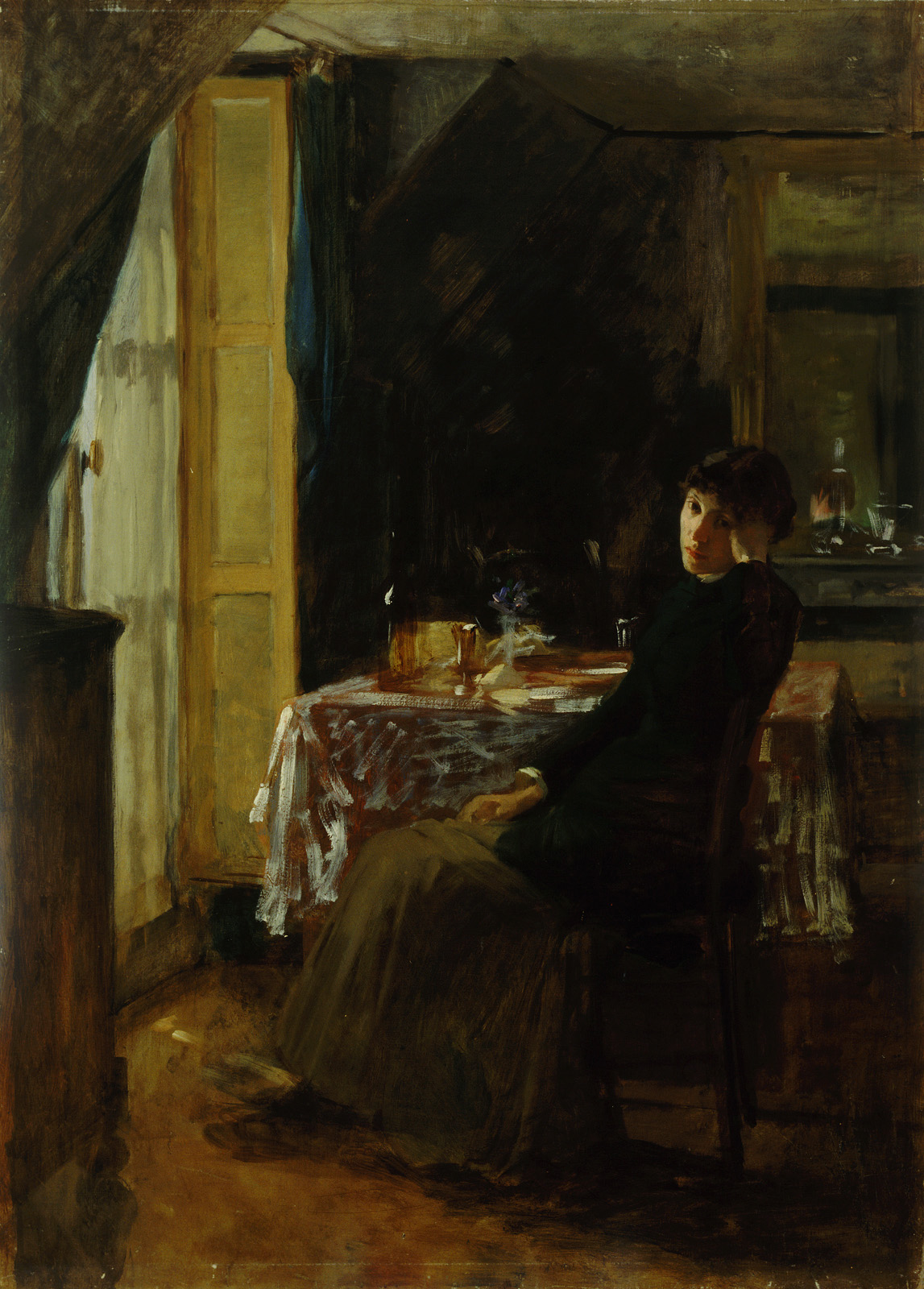
Alone
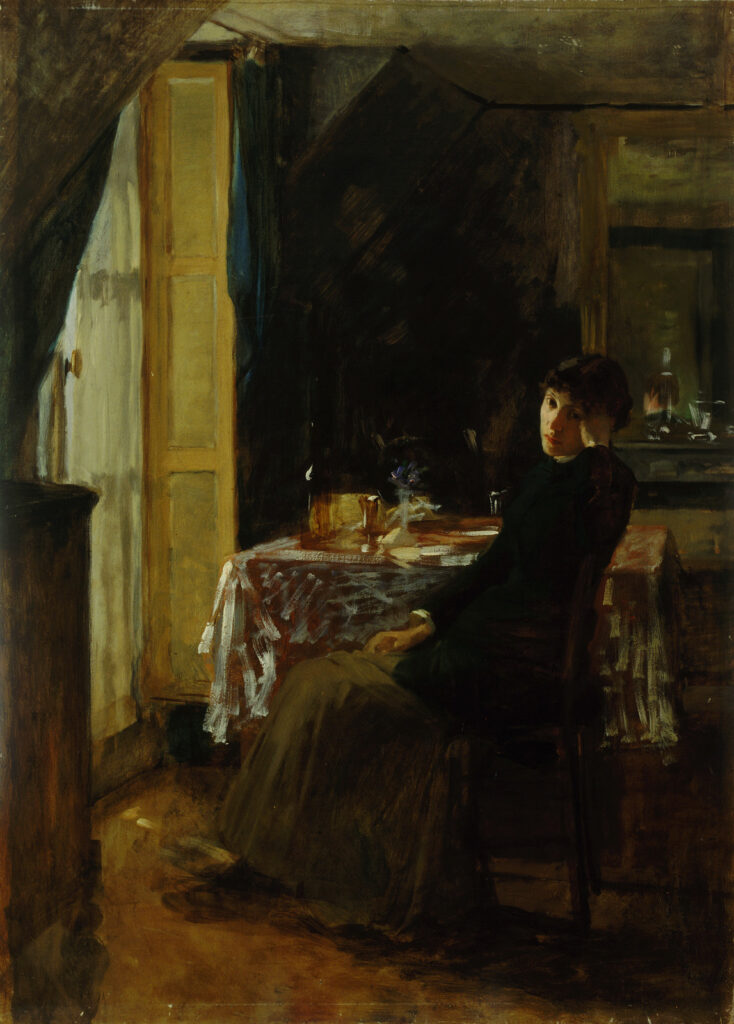
Jurij Šubic belonged to a generation that had been firmly convinced that the mission of art was to mirror the world. A painter had to identify, research visual phenomena and replicate them in his studio by invention of means that make a two-dimensional image convincing. The unfinished painting, not an exception of its kind at that, makes us think that the painter hit upon an inadequacy of the realist apparatus of execution. Loneliness or solitude cannot be set up as an object, a model to paint. It required formulation of a message. Šubic could have made use of the genre tradition but at risk of a pathetic performance of facial mimics. Tomaž Brejc has expressed the painter’s impasse formulaically: “The girl knows the solitude but not yet the condition of alienation.” In order to mediate the awareness of her existential condition, it was not enough to place an isolated figure into an empty room. The obligation to express that condition revealed the inadequacy of means available in realistic painting and the project stalled. Although a modern viewer aware of twentieth century innovations does not take it as inadequacy, for Jurij Šubic in the 1880s a nonfinito was not yet a legitimate choice.