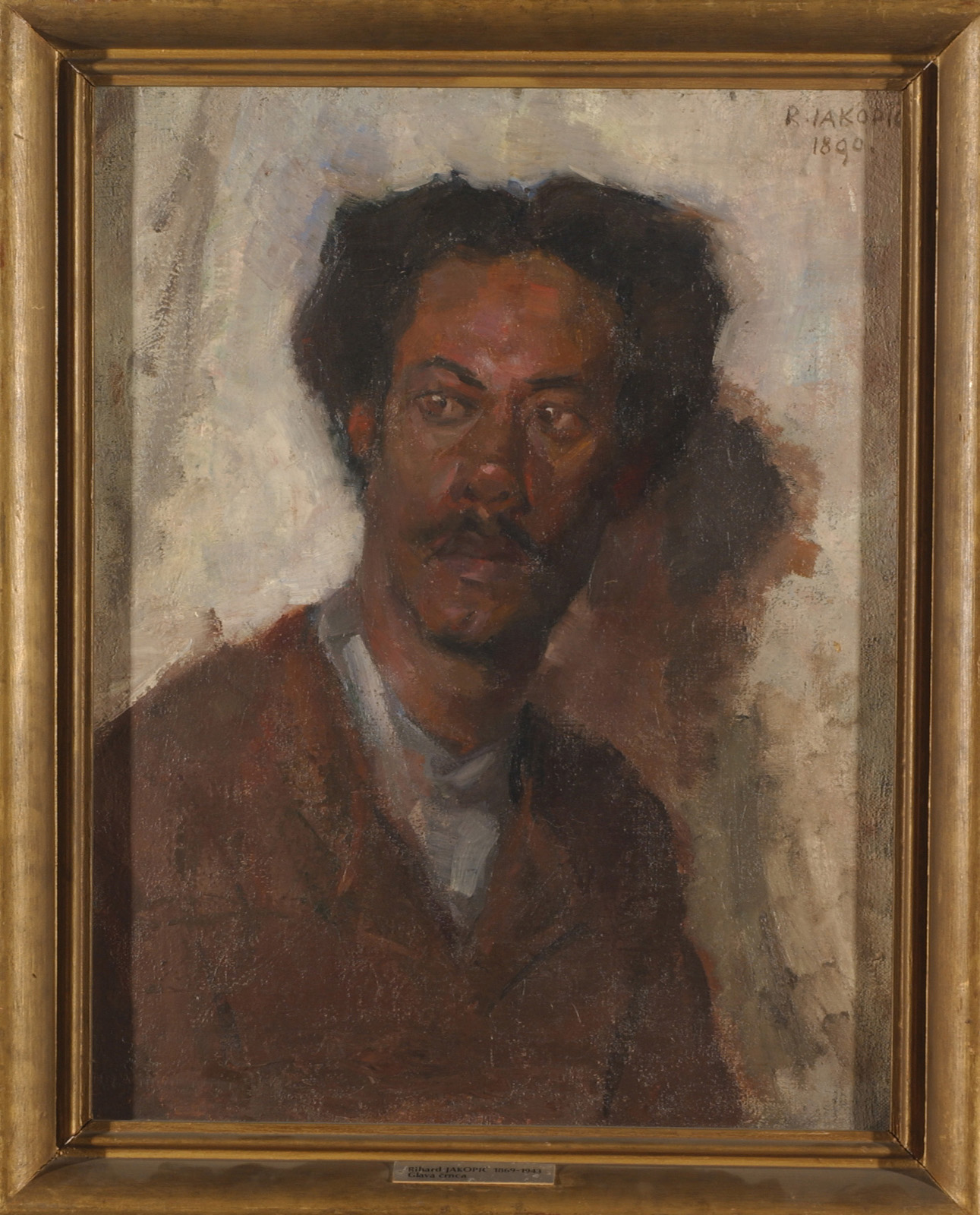
Head of a Black Man
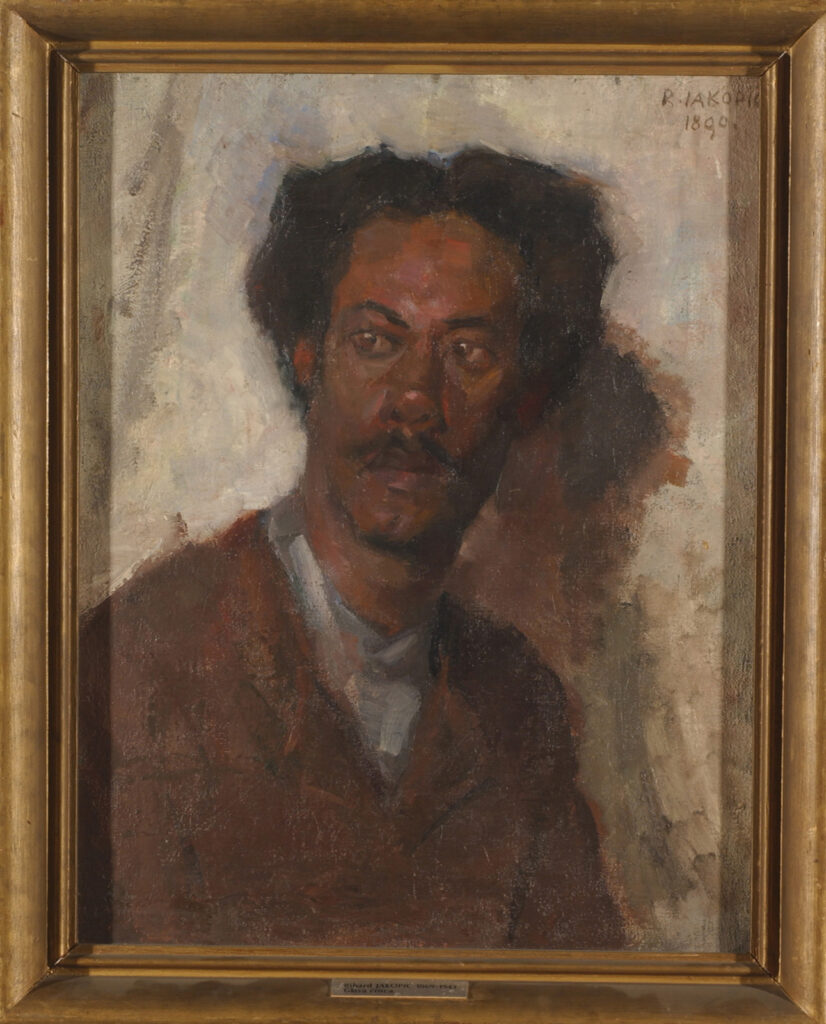
The early date of the painting makes its place within Jakopič’s oeuvre precarious. In the autumn of 1890, Jakopič arrived in Munich after having completed a few semesters at the Vienna Academy of Fine Arts. There is no comparative material whatsoever through the end of the century. The prominent signature must have been added much later due to a slip of memory. Its early date places it in sequence with Anton Ažbe’s masterpiece of 1889, making a claim to the teacher’s legacy which became pertinent only around 1900, or, perhaps, even as late as 1910 when Jakopič put together the first history of Slovenian art in an exhibition. It is more likely that Jakopič painted it before he left Munich for good in 1900, when Ažbe’s Black Lady still hung in the drawing room of his school as a model. As such, it fits the products of the school’s curriculum and Ažbe’s encouragement of students “to draw with paint”. The descriptive palette and suppression of drawing are the most outstanding properties also of Jakopič’s landscape painting at that time.