Autumn
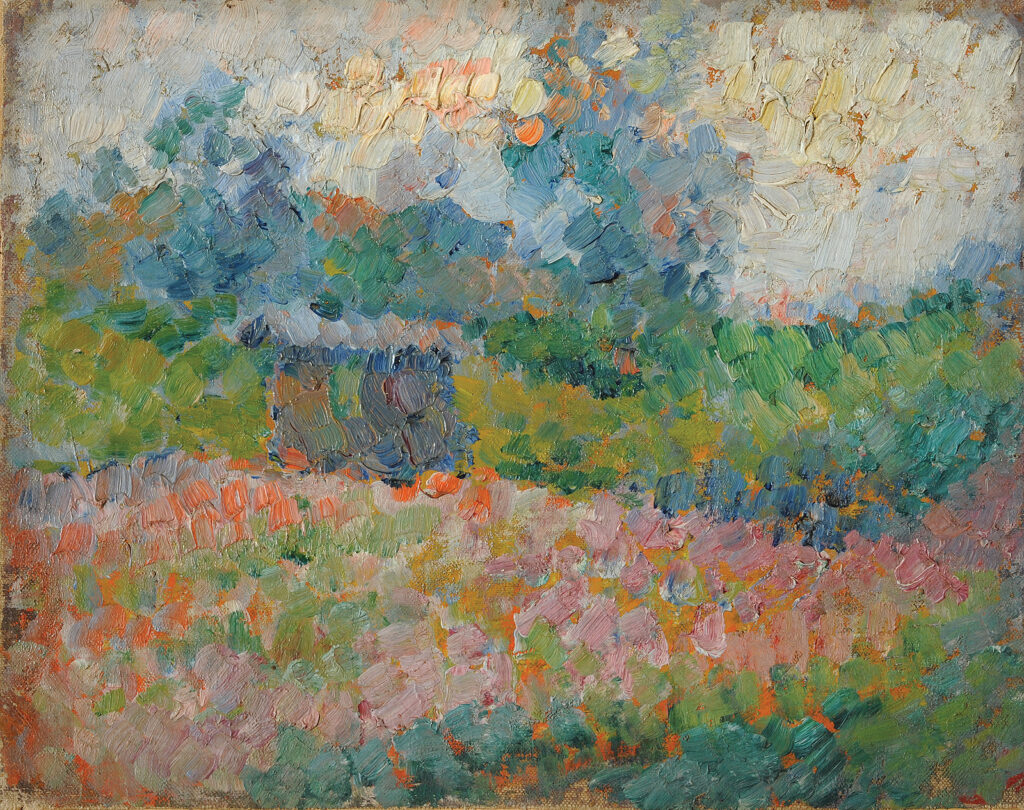
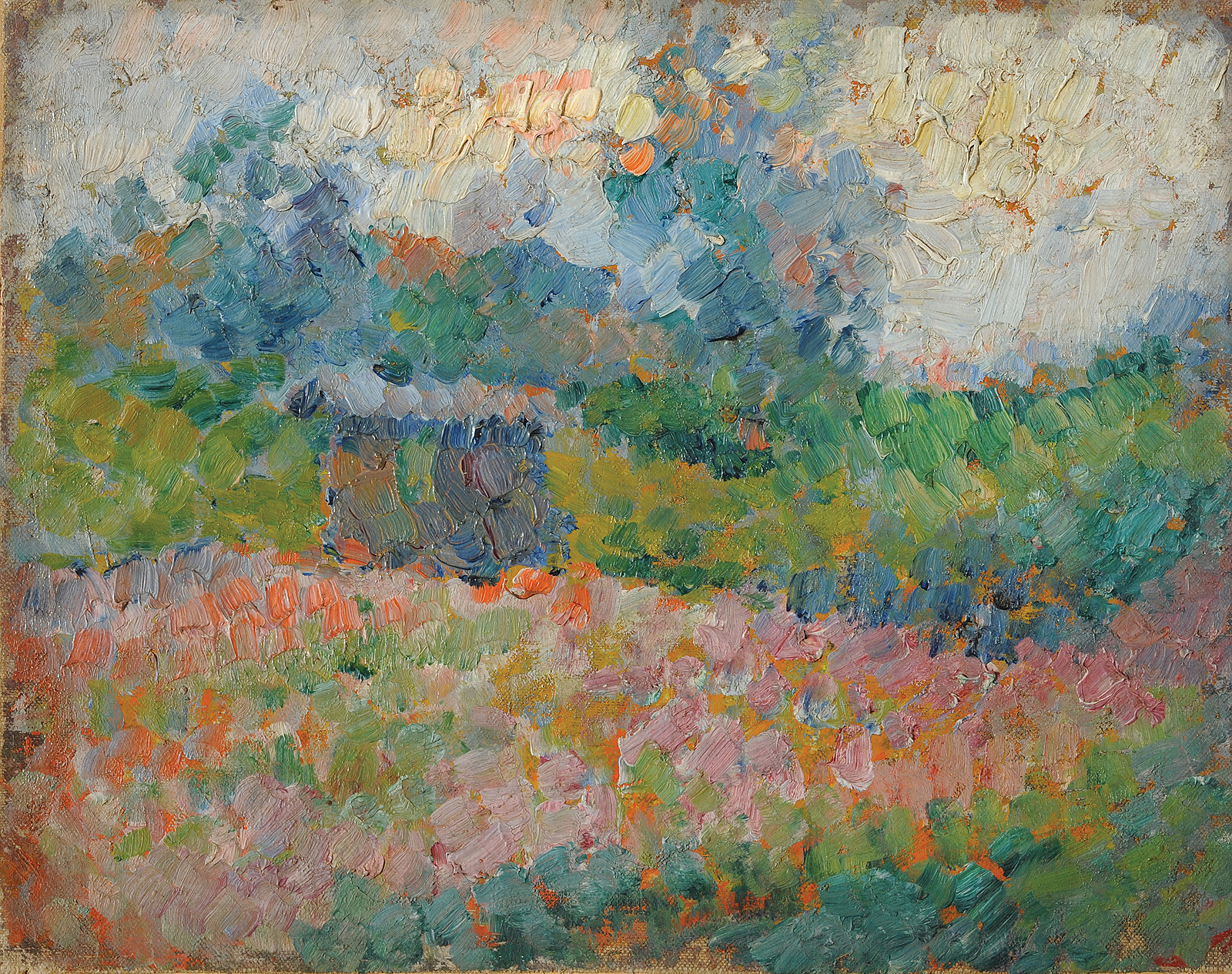
Jakopič experimented with pointillism in his Škofja Loka period around 1905, then again around 1912, not just in his landscapes but also in his more intimate works. Earlier works, such as his Study of the Sun (Študija sonca, NG S 3101) or Sunny Hill (Sončni Breg, NG S 110), use a much more limited palette with more subdued tones. From the second group, his Autumn (Jesen), housed in a collection at the City Museum of Ljubljana, is a panoramic view of the foothills of Križna Gora during a brilliantly clear day. His landscape with the hayrack, which should be entitled Autumn II (Jesen), is a similar panoramic view running across a pinkish field of buckwheat and across a green swath of meadow towards the gleaming sky, before which are towering a bluish mass of two trees. The pointillist technique is adapted more towards creating a visible experience than in serving the established design practice of constructing a painting. Jakopič brilliantly layered colors, a technique applied most intensely to the least material elements above the horizon. Compared to earlier etudes, the colors here are cleaner and are highlighted by the complementary contrast of red and green. Despite its small size, it is nonetheless a painting masterpiece, fully communicating to the viewer Jakopič’s ecstatic experience of the landscape motif.