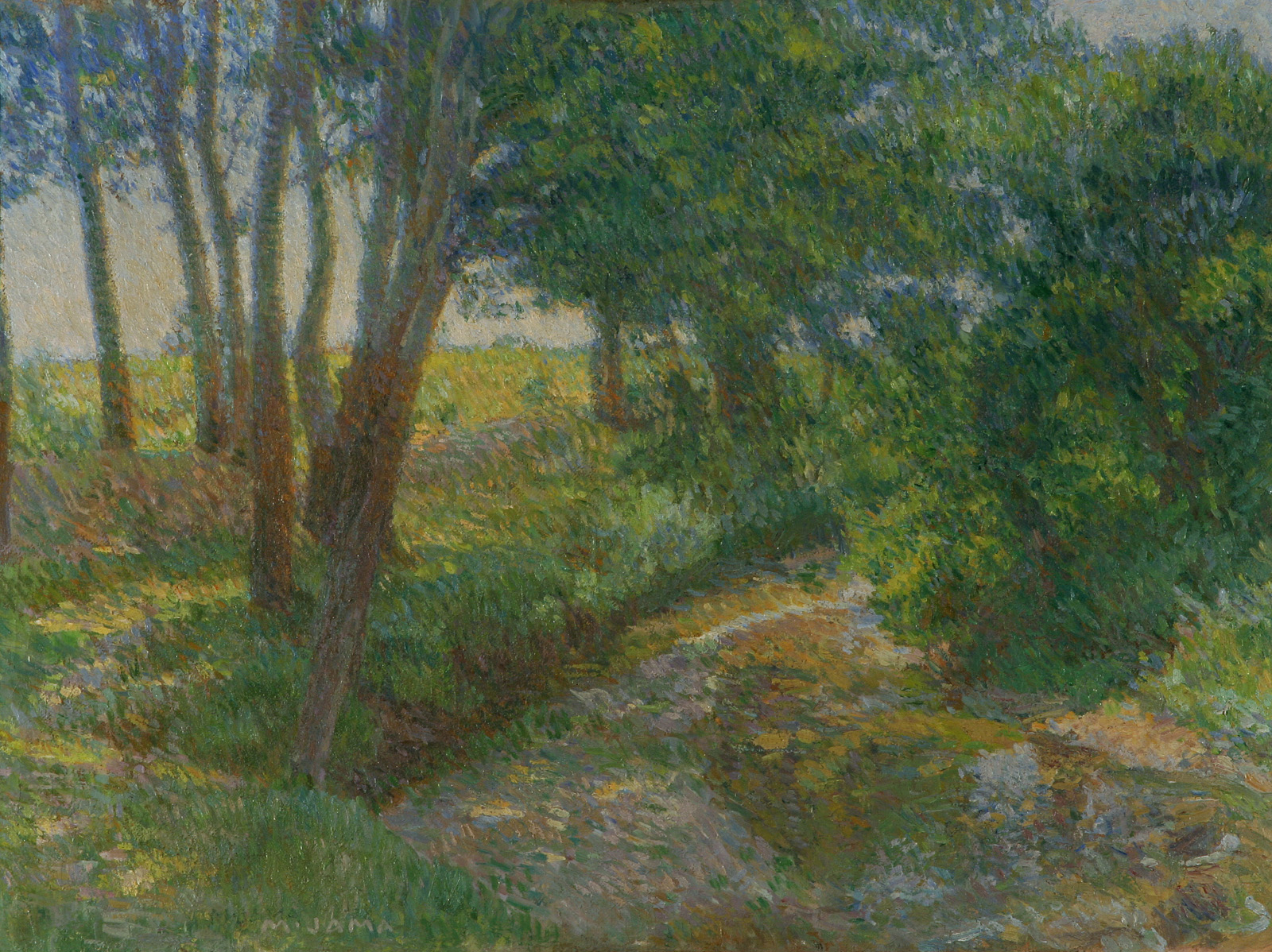
From Laxenburg II
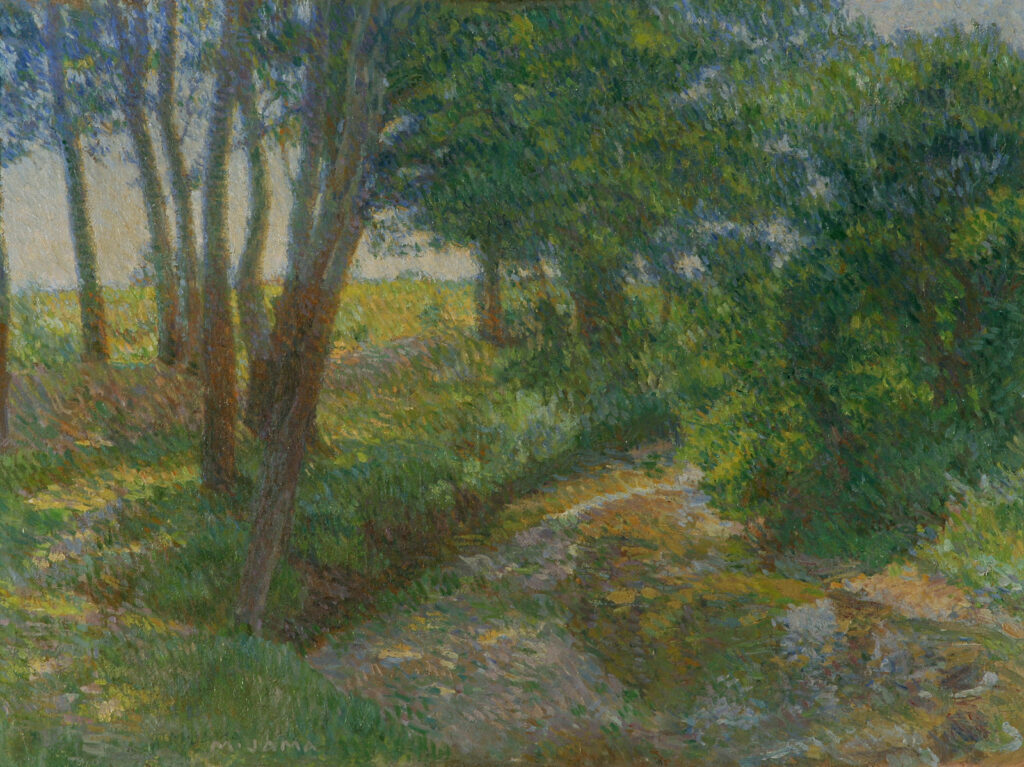
Mödling, a bit south of Vienna, was Jama’s destination in 1908, as he moved his family from outskirts of Slunj, Croatia. The rural surroundings, far removed from any urban centers and artistic milieus, eventually grew annoying for him. So, with the city and its galleries close at hand, Jama spent his time hunting for paintable vantage points in and around Vienna, up until the outbreak of World War I. After a brief sojourn to Holland in 1910, the next year he set off to Laxenburg, where he produced two large works in the park by Emperor Franz Joseph’s luxurious Biedermeier mansion. In his secession style, Jama interpreted established compositional patterns as a spectacle of light as it dappled through the canopy, combining in a rainbow of local colors. A shaded foreground, into which the sunlight of the open plain penetrates through the trees, remained a formulaic part of Jama’s landscape works for the next two decades. The fragmented composition highlights the ambiental trepidation and the immediate impression of a photographically framed scene. Along the smooth surface, he used several short strokes with white highlights where the stream pools to capture the reflections of light against the water.