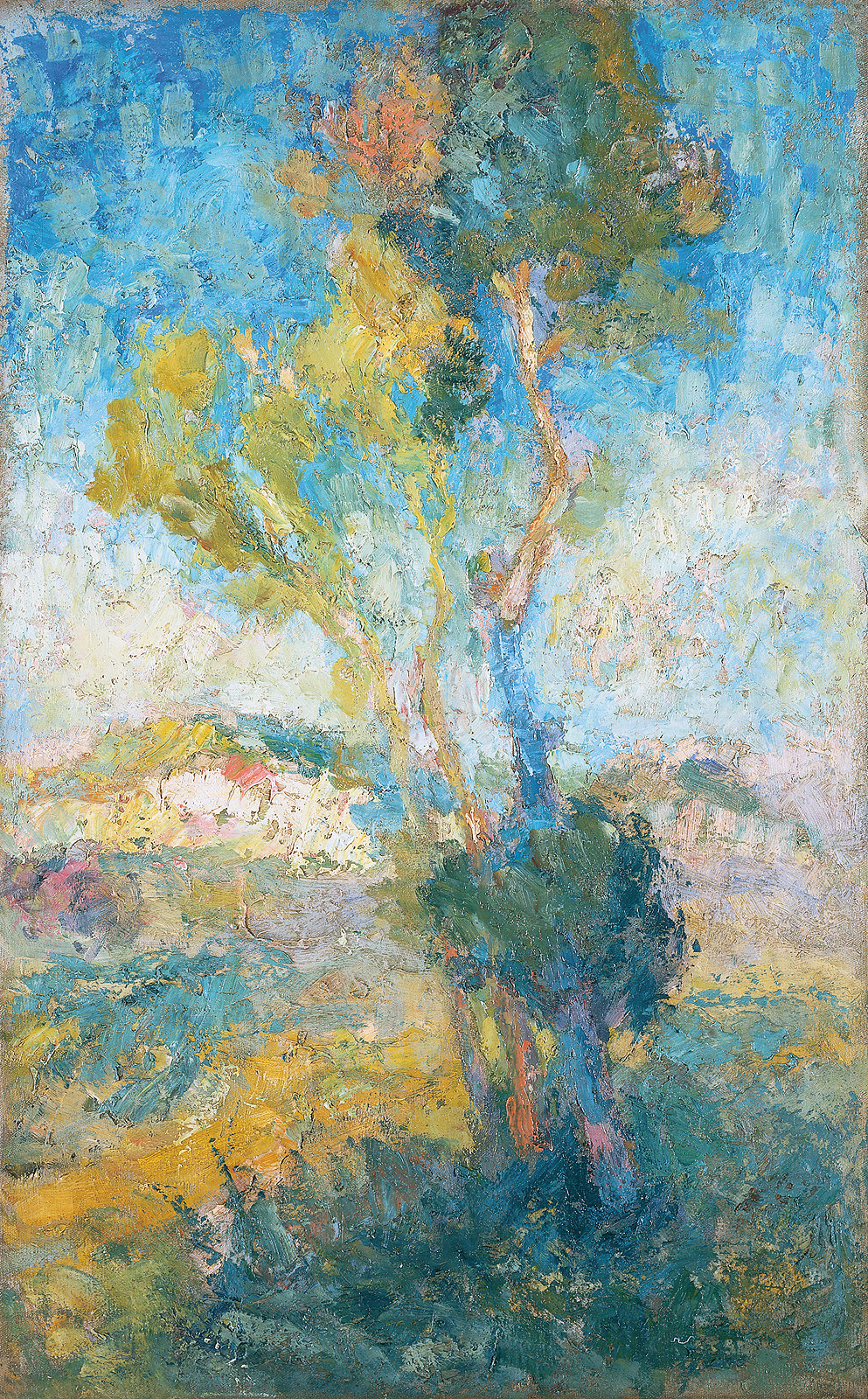
Poplars
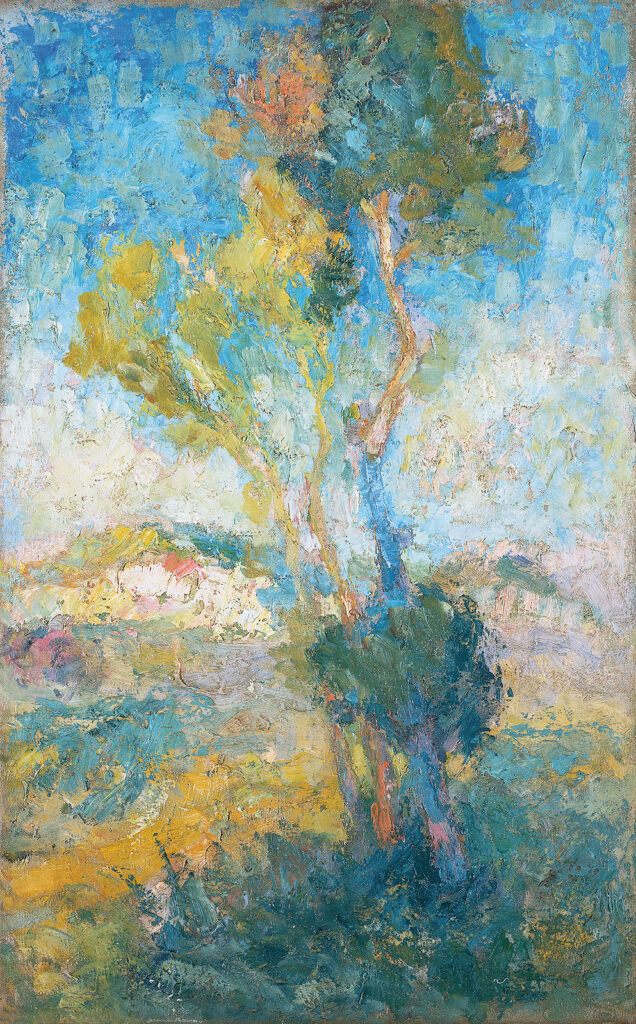
Jakopič took his most important step forward when he decided to direct his experimental energy into landscape painting. In 1901, he and Jama painted together in Stranska Vas. There, Jakopič elaborated certain compositional schemes that became his mainstays over the next 2 decades. Most likely, the later variations of those paintings did not require that he return to the scene of the motif, but were produced as studio riffs on the established scene. His Jagnedi v Jutranjem Soncu (Black Poplars in the Morning Sun), which appeared in 1904 among the prizes for winning the puzzles in Zofka Kveder’s Slovene newspaper Domači Prijatelj in Prague, have an original scheme of somewhat diagonally leaning trees in a narrow, upright format. In his Topoli (Cottonwoods), Jakopič replaced the front lighting with a more vivid color palette and more unrestrained brush strokes. The landscape’s relief, illuminated by the intense light of high noon, is squeezed in between the shadowy foreground and the sky’s successive layers of blue. The color transposition follows the visual information, but a reflection of the painter’s ecstatic experience is found in the tension created by the hues used. Poplar canopies are found in Jakopič’s experimental works between 1903 and 1905, though we usually date this painting to 1912, when the artist’s vibrant palette was again connected to pointillism and he returned to his early motif around Škofja Loka.