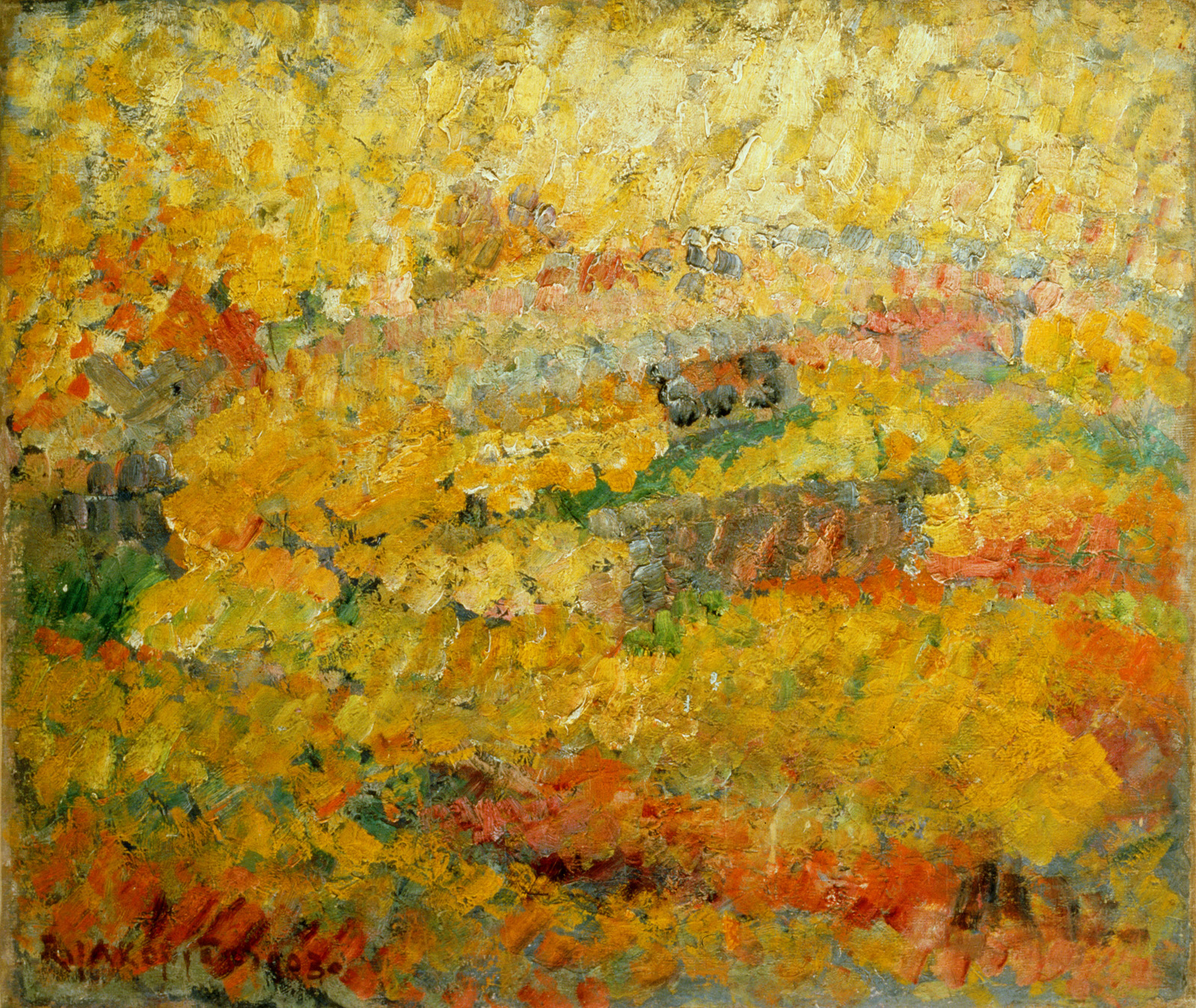
Sunny Hill
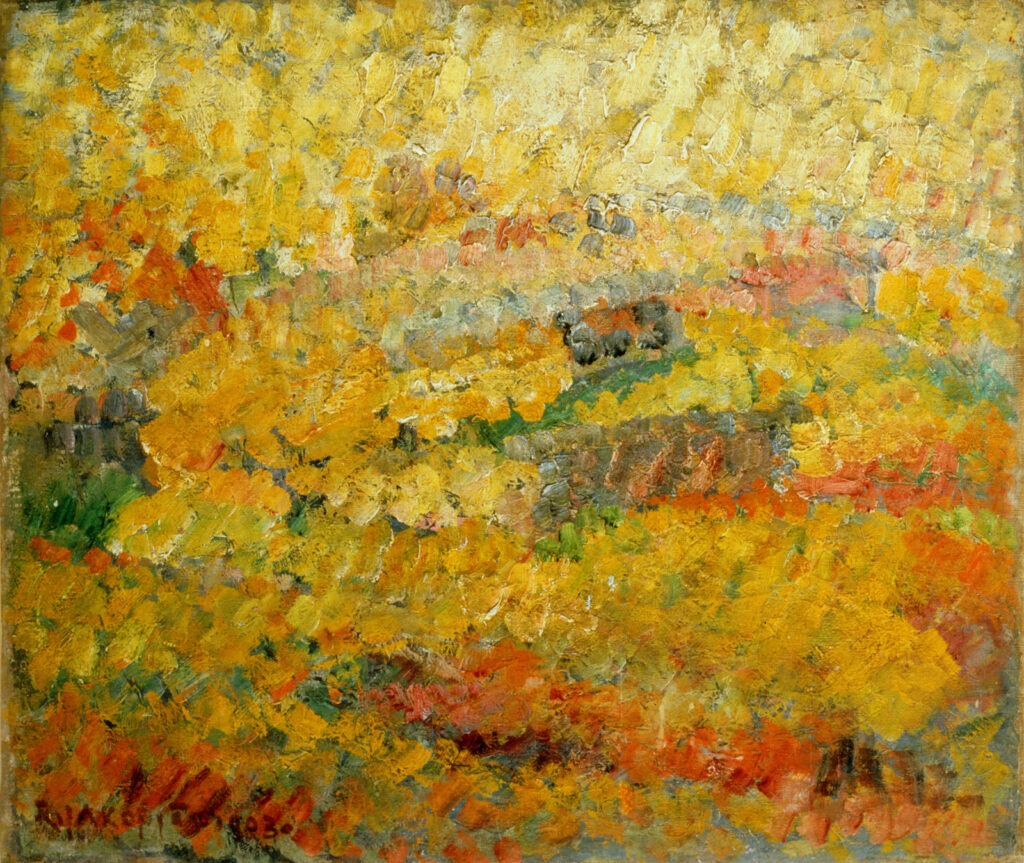
Although the painting Sunny Hillside was painted on stretched canvas, it should be understood as an experimental work. It surfaced in 1940 as a donation to the collection of the National Gallery of Slovenia. The artist had never mentioned it beforehand. The motif is recognizable as the northern flank of Kamnitnik Hill, where Jakopič often painted. We can discern treetops on the horizon and hayracks scattered on the hillside. Material aspects of the painting decisively overpower the attraction of the motif. The subjective transposition of the palette into the warm segment of the colour circle complements uniformly shaped brushstrokes laid in roughly horizontal strata across the picture surface. The colour sequence of contours defines a colour space and colour distinctions define particular objects. The relationship between drawing and colour is turned decisively in favour of the latter. Even if we dated Jakopič’s early experimental paintings ten years later, they would have held their relevance in relation to the first examples of abstract painting in the Western pictorial tradition.