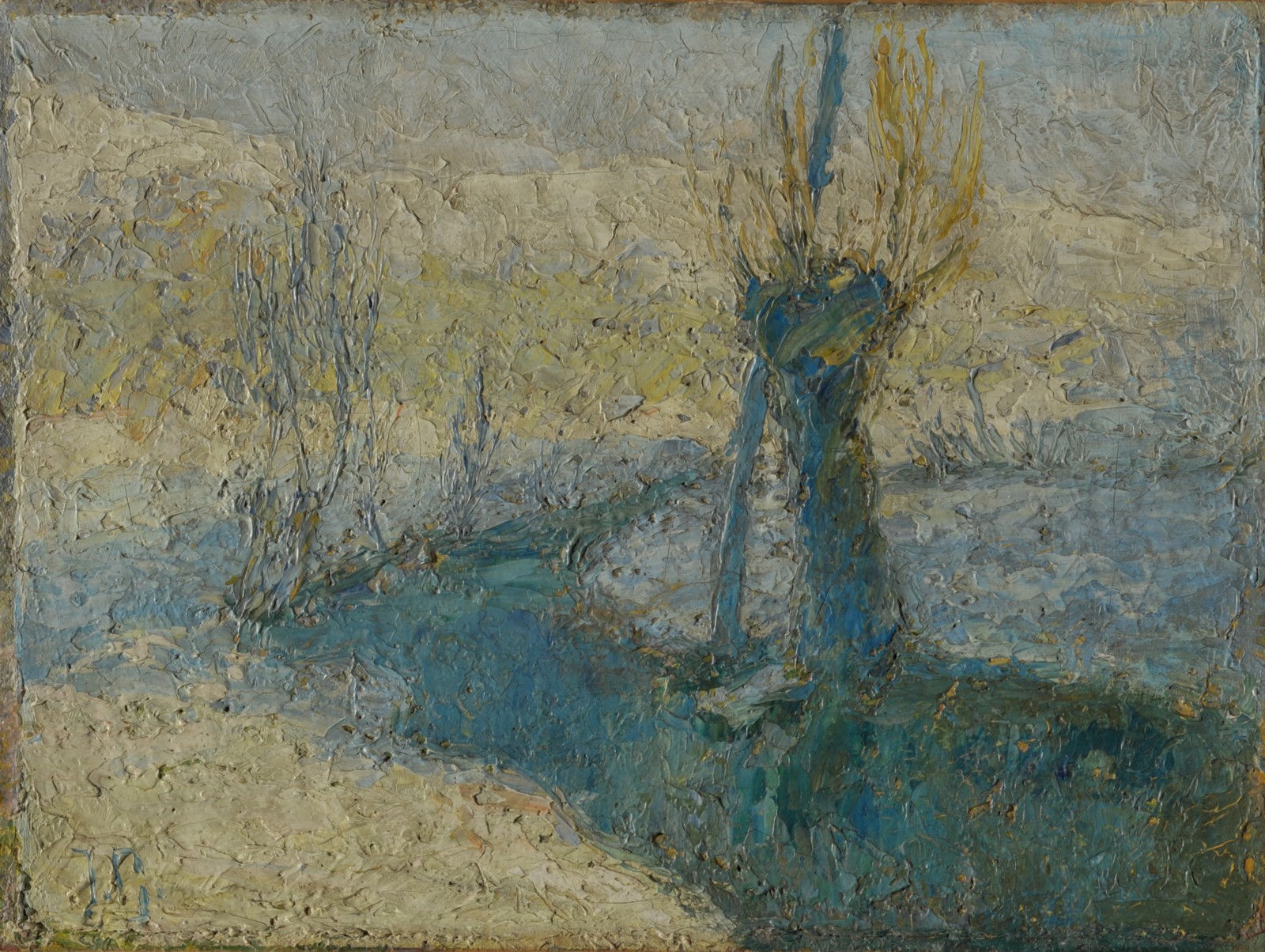
Willows by the Water
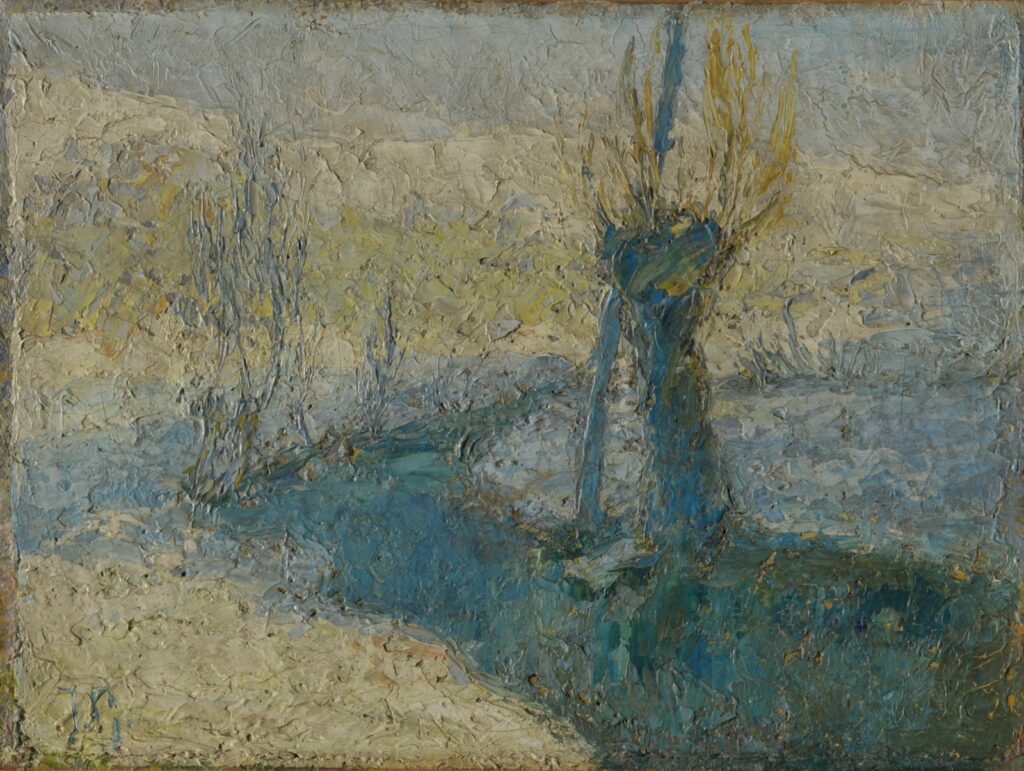
After arriving in Škofja Loka in 1904, Ivan Grohar painted in a close connection with Rihard Jakopič. Although his ambitions were directed primarily at salon-size paintings, his artistic process began outdoors as small pieces that cannot be properly regarded as etudes, but as true plein-air artworks. Among these, we can include his Vrbe ob Vodi (Willows by the Brook). The primacy of such images is explained by the greater desire to directly record sensory impressions than portray the motif itself, for which a means of expression must be found intuitively through improvisation. The race against time under the threat of sudden changes in lighting and atmospheric conditions dictated the economical nature and the suggestiveness of the artists’ technique. Grohar repeated this routine in large formats. Vrbe ob Vodi make up one of the characteristic winter motifs produced between 1905 and 1906, which the painter likely based on a scene in the narrow valley of the Selška Sora, as indicated by the long shadow cast by the hill, stretching out from the right to left across the bend in the river. Beyond the lone willow and the outline of the river, the painting has no other discernible details. The contrast between the shadow and the illuminated slope on the left, and the thick layers of paint combine for a synesthetic experience of opposites, as the warmth of the sun’s rays battles against the frigid shading of the riverbed and its bend.