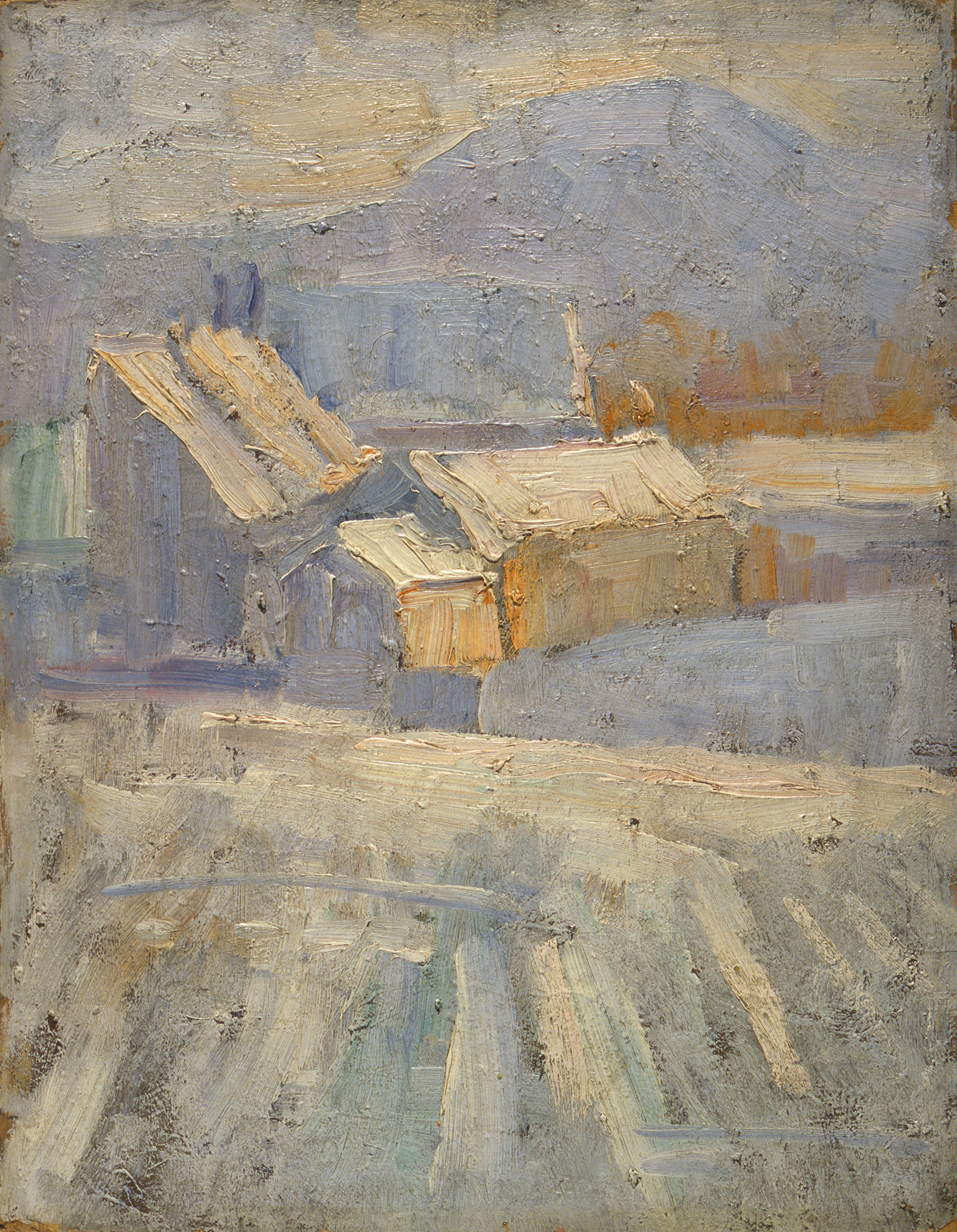
Winter at the Gradaščica River
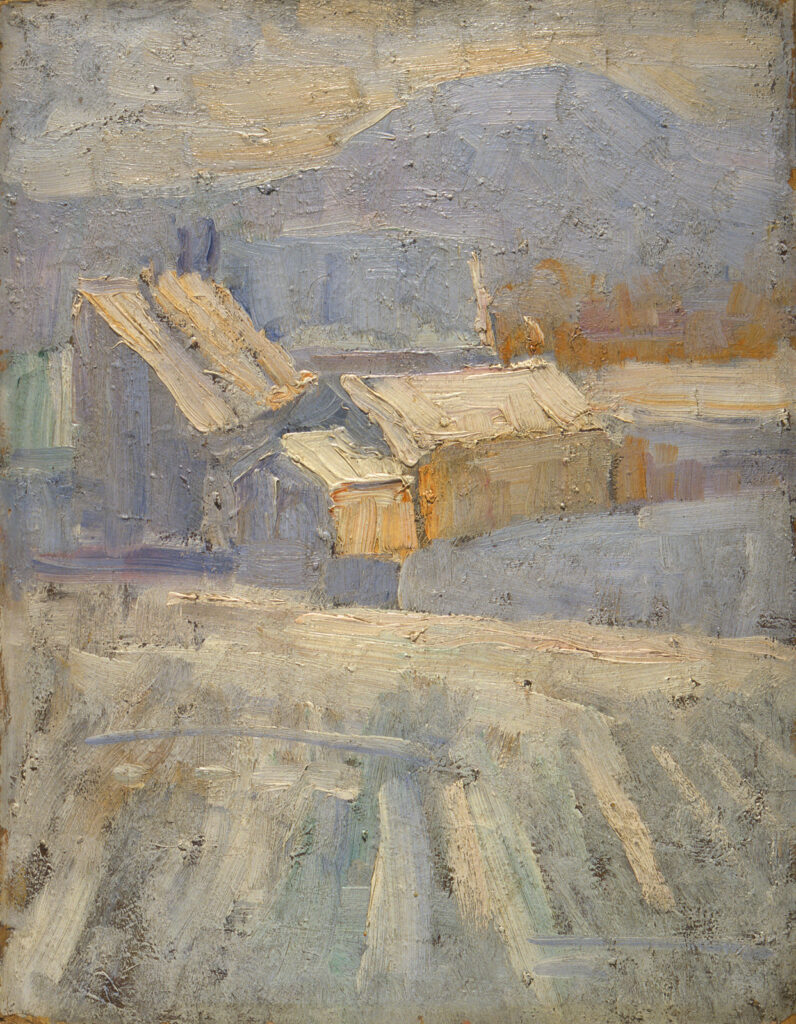
Winter motifs in Grohar’s and Jakopič’s opuses were extremely common around 1905, wherefore Tomaž Brejc dates Jakopič’s Zima ob Gradaščici (Winter along the Gradaščica) to the first of such paintings, but we could date it even earlier to the very beginning of the century. He even labeled it as an unfinished plein-air work without any retouching in the studio, and the dark-brown base coat, which radiates through the thin applications of paint at the bottom of the work, truly interferes with the painting’s aesthetic effect. Jakopič captured this motif of ancillary buildings from the second floor of his father’s new house (affectionately called the Ajdovski Gradec) along the Roman wall in Mirje. His bold, broad “Munich strokes” articulated the snow-covered landscape, bathed in the afternoon sun, while a mixture of purple and blue shadows and burnt sienna highlights were used to elaborate the illuminatory accents on the walls. The horizon outlines the silhouette of Mt. Krim in the background. The rough aesthetic and the broad brushstrokes speak to the haste with which the artist recorded the momentary impression he had standing before the scene. Jakopič honed this skill from 1898 onwards, which is why we usually date the second version of the motif to around 1900. The artist valued the painting enough to display it at exhibitions in Poland in 1908, showing it under the title Zimsko Sonce (Winter Sun). The National Gallery acquired it from Fran Vesel, as attested by the initials on the frame.